
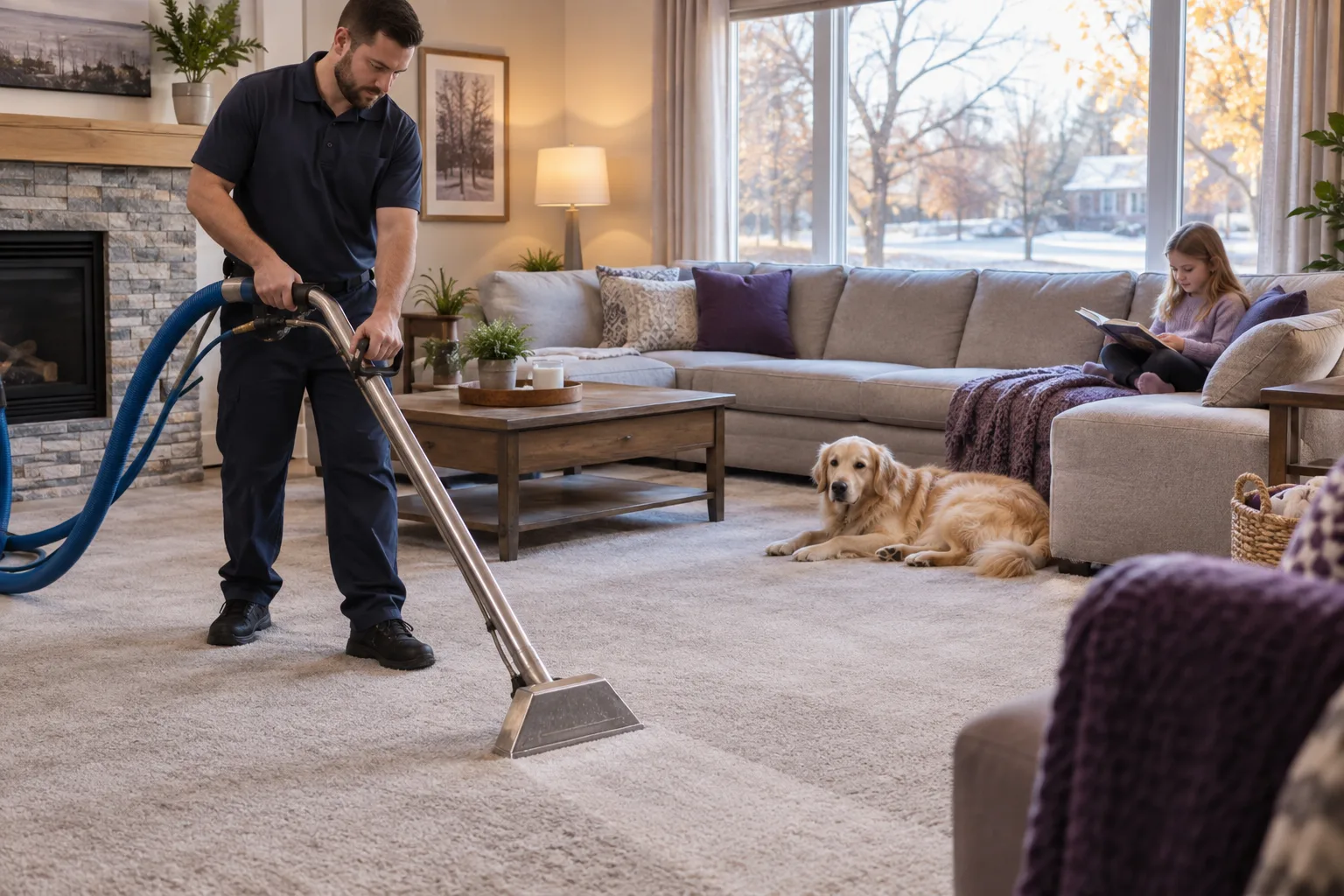
If you live in Winnipeg, carpet gets tested hard: long winters, wet entryways, busy family life, and the “invisible” buildup that shows up right when guests arrive. Most homeowners don’t actually need to wait until the carpet looks terrible—because by then, the work is harder, drying can take longer, and odors are more likely to linger.
So what’s a realistic schedule?
A simple baseline (and why you may want more)
The Carpet and Rug Institute often points to professional deep cleaning every 12–18 months as a general guideline to remove embedded soil and help carpets perform well over time. Your own site sets expectations that every 6–12 months is common for most homes, and high‑traffic or pet homes may benefit from more frequent cleaning.
Those two ideas don’t conflict. Think of 12–18 months as a “minimum maintenance standard,” and 6–12 months as a “Winnipeg‑realistic plan” for homes where you actually live (kids, guests, pets, rentals).
Practical schedule by household type
Here’s an easy way to decide:
If you have a low‑traffic home (no pets, no kids): Plan one professional shampoo extraction clean roughly once per year (or up to 18 months if the carpet truly stays clean).
If you have kids or frequent entertaining: Target every 6–12 months, especially in the hallway, stairs, living room, and any “snack zones.” Food oils + foot traffic create that grayish “walk path” effect over time.
If you have pets (even “good” pets): Still aim for 6–12 months, but add a second decision: do you have odor zones? If yes, consider enzyme treatment as an add‑on for those areas (more on that below).
If you’re in a rental or planning a move‑out: Book move-out cleaning at turnover or move‑out. It’s the fastest way to present the unit as “fresh, hygienic, and cared for,” and it reduces arguments over stains and smells.
“Shampoo cleaning” vs “enzyme treatment”: when each fits
Our deep carpet cleaning service includes pre‑inspection, targeted spot treatment, deep shampoo cleaning + extraction (and rinse when needed), plus focus on edges and traffic lanes. That’s the right choice for:
- general refresh
- visible soil buildup
- light stains / traffic darkening
- “my carpet just feels tired”
Where to mention enzyme in the article (and why): If the problem is organic—pet urine smell, repeated accidents, vomit, food proteins, or “mystery odor” that comes back after drying—your site explains that enzyme formulas are designed to break down the organic source of odors (not mask it), and they’re followed by deep extraction. This matches how enzymes are commonly described by the American Cleaning Institute: enzymes act like highly specific “scissors,” breaking down proteins, starches, or fats into smaller parts that are easier to remove.
Quick self‑check: do you need cleaning now?
Ask yourself:
- Do traffic lanes look darker even after vacuuming?
- Does the carpet feel sticky or “re‑soils” quickly (often residue from DIY products)?
- Do you notice odor more when humidity rises or after the carpet dries?
- Are you about to host guests, list a home, or do a move‑out?
If you answered “yes” to any two, it’s usually time.
The easiest way to get a fast quote (and book)
Your FAQ and contact page already tell people what you need: postal code/address, what needs cleaning, approximate size, and photos if possible, plus preferred date/time. Pricing is time‑based with a clear minimum: carpet shampoo cleaning starts from $57/hour and enzyme treatment from $97/hour, with a 2‑hour minimum booking.
Soft CTA: If you want a “no‑stress schedule,” send your postal code, a couple photos of the highest‑traffic areas, and tell us whether you have pets or lingering odor zones. We’ll recommend the simplest option first (shampoo extraction), and only suggest enzyme treatment where it actually makes sense.