
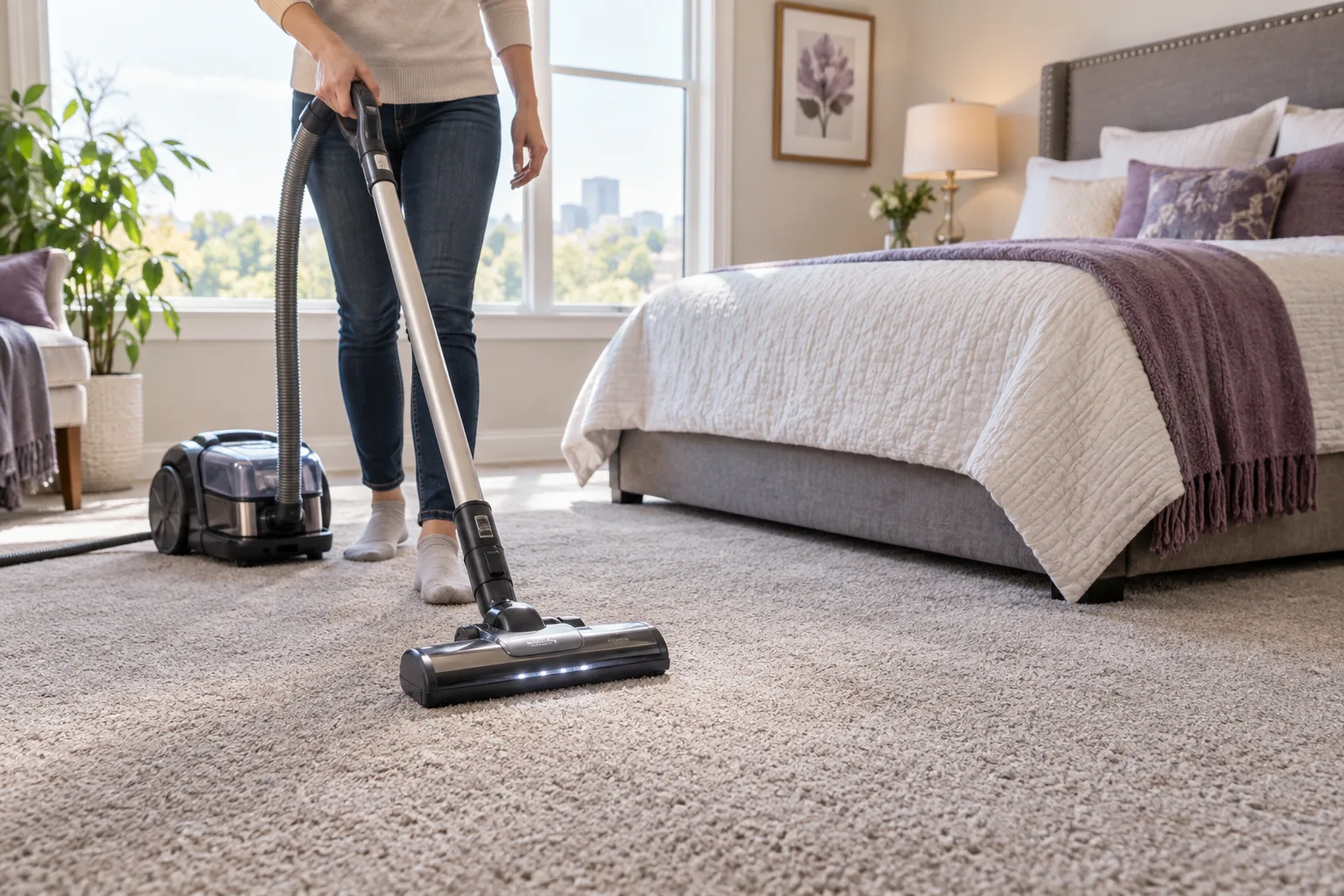
Let’s be honest: carpet cleaning isn’t a medical treatment. But a cleaner home environment is a comfort upgrade—especially if you’re dealing with dust, seasonal issues, or that “stuffy” feeling in soft‑surface rooms.
Health Canada notes that dust mites live in beds, carpets, and furniture, and exposure can aggravate asthma and allergies (especially in children). That doesn’t mean “rip out the carpet today.” It means your cleaning routine should be intentional.
What a realistic plan looks like
Layer 1: regular vacuuming and dust control This reduces surface dust and keeps the home feeling fresher.
Layer 2: periodic deep cleaning (carpet + upholstery) Carpet holds embedded soil and dust. Upholstery collects body oils, allergens, and everyday spills. We offer both carpet cleaning and upholstery cleaning using deep shampoo cleaning + extraction and steam/hot water extraction when appropriate.
Layer 3: humidity awareness (especially basements) EPA guidance suggests keeping indoor relative humidity below 60% (ideally 30–50%) to reduce moisture problems. This matters because damp environments can make odors and “musty” feelings worse.
Why “whole-room cleaning” converts better than “just one spot”
If you clean the carpet but ignore the couch, the room can still feel stale. Your upholstery page explicitly talks about dust, body oils, allergens, and spills accumulating in furniture—and offers deep shampoo and steam extraction methods based on fabric.
So this article should guide readers to a simple, high‑value decision:
- If the room is the problem, treat the room (carpet + upholstery).
Where enzyme treatment fits (allergy + odor reality)
Enzyme treatment isn’t for “dust.” It’s for organic contamination:
- pet accidents
- lingering “pet smell”
- organic odors that don’t go away after basic cleaning
Our enzyme treatment is an optional add‑on designed to break down organic odor sources (not mask them), followed by extraction. From a cleaning‑science standpoint, ACI explains enzymes are highly targeted and help break down specific soils (protein, fat, starch). For safety context, a peer‑reviewed review in Regulatory Toxicology and Pharmacology describes enzyme ingredients in cleaning products as having a strong safety profile when exposure is properly managed.
“How often should I do this?”
CRI commonly cites deep cleaning about every 12–18 months as a baseline, while your site notes every 6–12 months is common—especially for higher-traffic/pet homes. For allergy‑sensitive homes, the practical approach is: clean before it gets bad.
Make it easy to book
Your process is built for quick quoting: postal code/address + what needs cleaning + photos + preferred time. You also set clear expectations on minimum booking (2 hours).
Soft CTA: If you want a fresher whole room (not just a single spot), message us your postal code plus photos of the carpet and sofa. We’ll recommend the simplest plan—carpet shampoo extraction for the base clean, upholstery cleaning for comfort, and enzyme add‑on only if there are pet/food organic odor issues.