
Can Dirty Carpets Make Asthma and Allergies Worse in Canadian Homes?
For many households, carpet feels practical and comfortable. It softens noise, makes bedrooms warmer, and gives children a softer floor to play on. But carpet also holds what falls into it: dust, pet dander, tracked-in debris, moisture, and microscopic material that is easy to ignore until symptoms start building. That is why the health question is not really “Is carpet bad?” but “What happens when carpet is not maintained well enough for the people living on it?”
This matters because asthma is common in Canada. Asthma Canada says 4.6 million people in Canada live with asthma, and the Public Health / Health Infobase data show asthma remains one of the most common long-term conditions in children and youth. In 2023, 6.4% of children and youth were reported to have diagnosed asthma as a long-term condition.
Why carpet can become an indoor allergen reservoir
Carpet does not create asthma by itself. The bigger issue is what it can collect and hold. Health Canada notes that carpets, fabric, foam chair cushions, pillows, and mattresses can attract dust mites, and those mites produce allergens. Health Canada also says dust and dust mites can cause allergic reactions and aggravate pre-existing conditions such as asthma.
That means the risk is not simply “carpet versus no carpet.” The real risk is carpet plus time, humidity, dust, pet residue, and low cleaning frequency. In homes where vacuuming is inconsistent, humidity is high, pets share indoor space, or repeated spills and pet accidents are left deep in the fibres, carpet can become a long-term source of irritation rather than a neutral surface.
Why children may be more exposed than adults
One of the strongest angles for this article is children’s exposure. Health Canada specifically notes that children and toddlers are at greater risk because they may accidentally swallow or inhale dust during normal daily activities. In practical terms, kids spend more time on the floor, closer to the surface where dust, dander, and fine particles settle. Crawling, playing with toys, lying on carpet, and putting hands near the face all increase exposure opportunities.
This does not mean every child in a carpeted home will develop asthma. But it does mean parents should think differently about bedroom carpets, basement carpets, older wall-to-wall carpet, and high-use family rooms — especially if a child already has eczema, allergies, wheezing, or a diagnosed respiratory condition. Health Canada also notes that exposure to dust mites has been shown to cause the development of asthma in genetically susceptible children.
Can carpet cause asthma, or does it mainly make symptoms worse
This is where the article needs medical precision. The evidence-based message is that carpet can trap allergen sources such as dust mites and may worsen indoor exposure. In sensitive people, that can aggravate asthma and allergy symptoms. Organisations such as Asthma Canada and HealthLinkBC also recommend reducing dust-mite exposure by lowering humidity, cleaning frequently, and in some cases removing carpeting — especially in bedrooms or other rooms used by people with symptoms.
So the safest conclusion is this: dirty, damp, or poorly maintained carpets can absolutely make a bad indoor environment worse for people with asthma or allergies. Carpet is not the only trigger, and it is not the only cause, but it can become part of the problem when dust, pet dander, humidity, and organic contamination are allowed to build up.
When carpet becomes a bigger problem
Some situations raise the risk more than others:
- homes with pets and repeated accident areas;
- bedrooms with older wall-to-wall carpet;
- basements with dampness or seasonal humidity;
- high-traffic family rooms that trap dust and soil;
- households with children who play on the floor daily;
- homes where someone already has asthma, allergies, or chronic nasal congestion.
Asthma Canada recommends keeping humidity below 50%, and HealthLinkBC suggests controlling dust and dust mites in carpets, drapes, bedding, and furniture. If a bedroom is a major symptom zone, hard-surface flooring is often easier to maintain than carpet.
What families can do right now
The first step is not always ripping out carpet. In many homes, the immediate win is better maintenance. That means vacuuming consistently with strong filtration, cleaning visible stains correctly, controlling humidity, washing bedding often, and dealing with pet urine or organic odours before they spread deeper. For homes with a known dust-mite problem, reducing soft dust-collecting materials in bedrooms can make a meaningful difference.
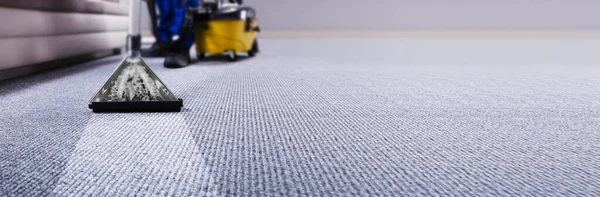
If carpet already smells, feels dusty soon after vacuuming, or seems to trigger symptoms more in one room than another, professional deep cleaning may make sense. Professional cleaning will not cure asthma. But it can help remove built-up soil, residue, and some indoor contaminants that regular household cleaning leaves behind. That is especially relevant after pet accidents, during move-outs, or in older high-traffic carpets.
The practical takeaway
For Canadian families, this is really an indoor-air-quality story. Carpet can stay part of a healthy home when it is dry, maintained, and cleaned properly. But neglected carpet is different. In homes with kids, allergy sufferers, pets, or recurring odour and dust problems, regular deep cleaning is not just cosmetic. It is part of reducing exposure to the things people breathe every day.